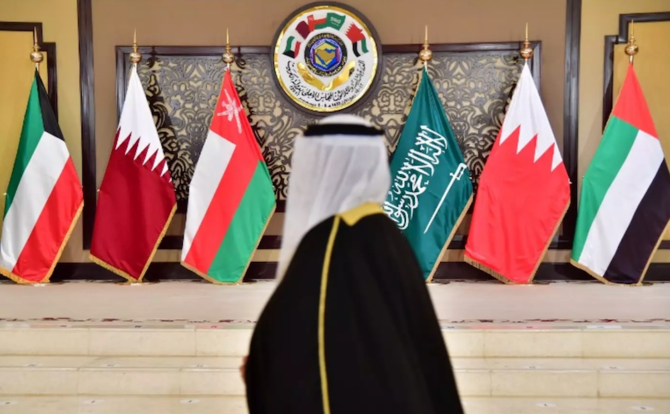
For years, Gulf governments promised to build economies that could better withstand swings in oil prices. That shift now looks far more tangible. The World Bank said GCC growth is expected to strengthen in 2025 and 2026, with robust non-oil expansion supporting the region alongside a gradual easing of OPEC+ production cuts. It described non-oil sectors as a key engine of growth across several member states.
Saudi Arabia offers one of the clearest examples. The IMF said the kingdom’s non-oil real GDP grew 4.2 percent in 2024, led by retail, hospitality and construction, even as oil GDP contracted under production cuts. The fund also said Saudi non-oil activities expanded 4.9 percent year on year in the first quarter of 2025.
The UAE shows a similar pattern. The Ministry of Economy said real GDP grew 3.9 percent in the first quarter of 2025, while non-oil GDP rose 5.3 percent and oil-related activities accounted for 22.7 percent of output in that period. Abu Dhabi also reported record non-oil contributions to GDP in 2024.
That matters because it changes the region’s growth model. Oil still funds budgets, sovereign wealth strategies and major state investment. Yet tourism receipts, financial flows, cargo traffic, digital services and industrial output now carry more of the day-to-day economic story.
Tourism has become a serious pillar of GDP growth
Tourism is no longer a side story in the Gulf. It is now one of the main ways governments create jobs, attract foreign spending and support aviation, real estate, retail and hospitality.
Dubai extended its record run in 2025, welcoming 19.59 million international overnight visitors, up 5 percent from 2024, according to official figures. The city also reported hotel occupancy above 80 percent and retained Dubai International’s status as the world’s busiest airport for international passengers.
Saudi Arabia has also pushed tourism deeper into the center of its growth strategy. Official tourism data show the kingdom recorded 29.7 million inbound tourists in 2024, while state media said total domestic and inbound tourism reached about 116 million that year. Religious travel remains crucial, but leisure tourism has become more important as visa rules loosen and new destinations open.
The broader regional backdrop supports that shift. UN Tourism said the Middle East remained the strongest-performing world region in 2024 relative to pre-pandemic levels, underscoring the Gulf’s ability to turn air connectivity and destination investment into sustained visitor growth.
“The tourism sector is one of the key drivers of economic diversification and sustainable growth,” Dubai officials said in their 2025 tourism review.
Ports, airports and logistics are turning geography into growth
The Gulf has always had a strategic location. What changed is the scale of investment built around that advantage.
The UAE continues to use ports, free zones and integrated transport networks to anchor trade-led growth. AD Ports Group reported record 2025 revenue, driven in part by strong activity in ports, economic cities and logistics. Khalifa Port said container throughput rose 21 percent year on year in the first half of 2025 to 3.62 million TEUs.
Saudi Arabia is making the same bet through port upgrades, rail links and industrial zones tied to Vision 2030. Oman has placed Duqm at the center of its logistics and industrial strategy, with the Special Economic Zone at Duqm describing itself as a major driver of long-term socioeconomic development.
This matters beyond shipping. Stronger logistics networks support manufacturing, warehousing, re-exports, e-commerce and aviation. In other words, transport infrastructure does not just move goods. It multiplies activity across the wider non-oil economy.
Finance and business services are expanding with the investment cycle
Financial services remain one of the Gulf’s most durable non-oil strengths, but the sector is evolving fast as regulators compete for fintech firms, private capital and global asset managers.
DIFC says it has solidified its position as the leading AI, fintech and innovation hub across the Middle East, Africa and South Asia, offering accelerator programs, growth-stage funding access and tailored licensing. ADGM also reported growth in licensing and asset management in 2025. Bahrain continues to market itself as a regional center for digital banking and fintech, supported by regulatory reform.
Qatar’s business platform is also expanding. Qatar Financial Centre said registrations jumped 64 percent year on year in the first half of 2025, with 828 new firms and a 19 percent increase in assets under management at corporate and investment banks.
Saudi Arabia has widened market access as part of the same push. Reuters and official Saudi state media reported that the kingdom opened its capital market to all categories of foreign investors starting February 1, 2026, a move designed to broaden the investor base and deepen liquidity.
Clean energy, mining and advanced industry are building the next export base
Diversification in the Gulf is not limited to services. It also includes large-scale industrial bets.
Abu Dhabi’s Al Dhafra project describes itself as the world’s largest single-site solar photovoltaic plant, with 2 gigawatts of capacity and enough power for more than 160,000 households. Saudi Arabia’s NEOM Green Hydrogen Company says its project was more than 80 percent complete at the start of 2025 and remains on track for product availability in 2027.
Mining has gained strategic importance as Saudi Arabia tries to widen its industrial base. The World Bank said Oman’s non-hydrocarbon sectors are increasingly driving growth, while Saudi policy continues to steer investment toward new productive industries.
These projects carry a second purpose. They create supply chains, technical jobs and export capacity that do not depend directly on crude.
Technology is no longer a niche story
Tech has become an economic development strategy across the Gulf, not just a branding exercise. Saudi Arabia and the UAE now treat AI, fintech, digital infrastructure and startup formation as core competitiveness issues.
Saudi Venture Capital’s H1 2025 report said Saudi startups raised a record $860 million across 114 deals in the first half of the year, with fintech ranking first by deal count and drawing $273 million in funding. DIFC continues to market itself as a regional hub for AI and innovation firms, while Bahrain and Qatar are also using regulation and business-friendly platforms to attract digital companies.
Internet penetration, digital payments and state-backed tech strategies give the Gulf an advantage in scaling online services quickly. That does not mean every project will work. It does mean the region has moved far beyond the stage where tech served mainly as a future narrative.
The key non-oil sectors to watch in 2026
Tourism and hospitality: Dubai’s record visitor numbers and Saudi Arabia’s rising inbound tourism show that travel now feeds growth, jobs and foreign spending.
Trade and logistics: Port throughput, free zones and airport traffic keep the Gulf central to trade routes linking Asia, Europe and Africa.
Financial services: DIFC, ADGM, Bahrain and QFC continue to expand their roles in banking, fintech and cross-border business services.
Clean energy and industry: Solar, hydrogen and industrial projects are creating a broader export and employment base.
Technology and startups: Venture funding, innovation hubs and regulatory reforms are pushing digital sectors deeper into the core economy.
Oil still matters in the Gulf, and it will for years. But the region’s growth story has become far more complex and far more resilient. Tourism fills hotels and planes. Ports move cargo into industrial zones. Financial centers channel capital into new companies. Solar and hydrogen projects build future export capacity. Startup ecosystems attract founders and investors who once looked elsewhere first.
That is the real shift in 2026. The GCC no longer talks about diversification as a distant goal. It is already visible in GDP composition, investment patterns and business activity across the region.