Saudi Arabia is expanding Red Sea routes to reduce exposure to Strait of Hormuz disruptions.
NEOM Port has enabled a Europe-Egypt-NEOM-GCC multimodal corridor.
The East-West Pipeline gives Saudi Arabia a major oil export route to the Red Sea.
Hormuz remains critical, with nearly 20 million barrels per day of oil exported through it in 2025.
The strategy reduces risk, but it does not fully eliminate dependence on Hormuz.
Saudi Arabia Looks West as Hormuz Risks Grow
Saudi Arabia’s push toward the Red Sea is becoming more strategic as tensions around the Strait of Hormuz revive concerns over energy security and trade disruption.
The shift did not start with the latest crisis. Riyadh has spent decades building alternatives to the Gulf route, including the East-West Pipeline to Yanbu and major port investments on the Red Sea.
The Strait of Hormuz remains one of the world’s most important oil chokepoints. The International Energy Agency said nearly 20 million barrels per day of oil were exported through the Strait in 2025. It also estimated that Saudi Arabia and the UAE have only 3.5 million to 5.5 million barrels per day of available alternative export capacity through existing routes.
NEOM Port Adds a Trade Route, Not a Full Hormuz Replacement
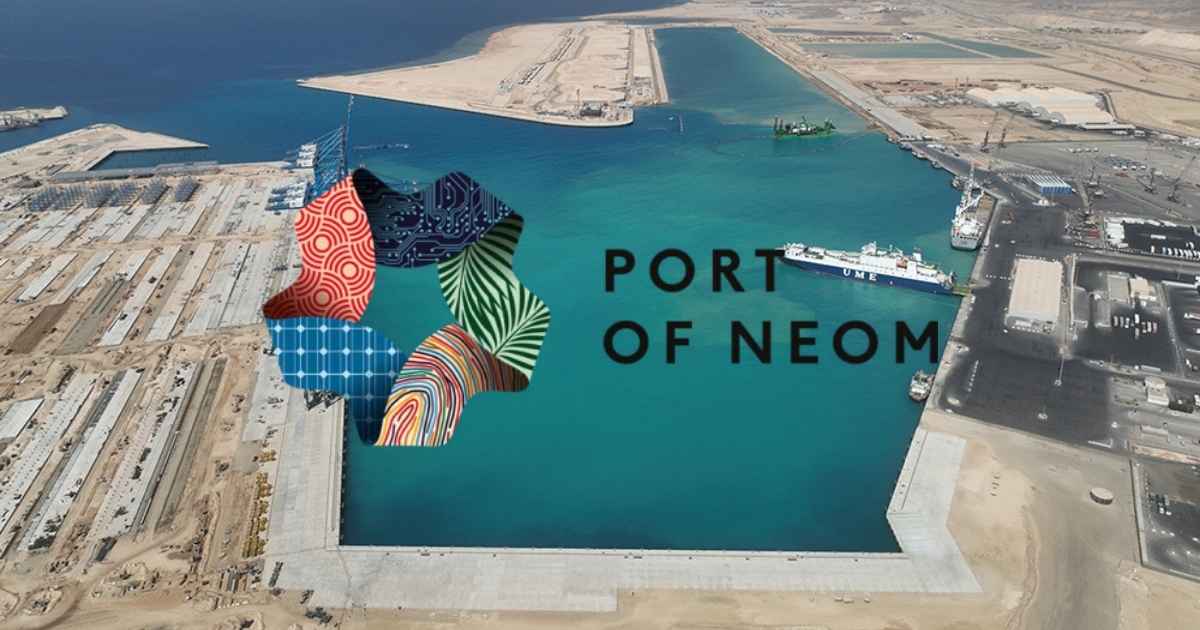
NEOM Port, formerly Duba Port, now plays a growing role in Saudi Arabia’s logistics strategy. NEOM says the port is already handling general cargo, project cargo, containers, bulk shipments, warehousing and RoRo ferry operations. Its new T1 container terminal is expected to launch in 2026 with 1.5 million TEU capacity.
On April 14, NEOM announced that Port of NEOM, with Pan Marine and support from DFDS and regional logistics partners, had enabled a multimodal corridor linking Europe, Egypt, NEOM and the GCC. The route combines ferry-based freight and trucking services.
The corridor strengthens Saudi Arabia’s position as a logistics hub, but it mainly serves cargo and trade connectivity. It does not replace Hormuz for all oil flows.
What Saudi Arabia Gains
Riyadh’s strategy gives it more options during disruption.
Key advantages include:
More access to Red Sea shipping routes
Better links between Saudi ports and Gulf markets
Reduced pressure on Gulf-facing infrastructure
Stronger alignment with Vision 2030 logistics goals
Greater flexibility during regional crises
The East-West Pipeline remains central to the energy side of the strategy. Reuters reported that the pipeline can transport up to 7 million barrels per day from the Gulf to the Red Sea port of Yanbu, although actual export levels may vary.
Why the Strategy Still Has Limits
Saudi Arabia can reduce Hormuz exposure, but it cannot fully remove it.
The Red Sea route also carries risks, especially around Bab el-Mandeb and regional maritime security. Shipping companies still weigh cost, time, insurance and reliability when choosing routes.
That makes the Saudi strategy less about replacing Hormuz entirely and more about building redundancy. In a region where a single chokepoint can move global oil prices, redundancy has become a strategic asset.
Saudi Arabia’s Red Sea push fits that logic. It gives Riyadh more room to maneuver, supports Vision 2030 and strengthens its role in regional trade. The Strait of Hormuz still matters, but Saudi Arabia wants fewer parts of its economy to depend on it alone.