Something breaks on a Lebanese street and the story tends to end the same way. Neighbours complain, someone promises to call the municipality, and the pothole stays where it is. Baladi Map, an independent civic platform that launched on the web this year, was built to break that loop by turning every complaint into a public record with a status attached to it.
A Pothole, a Photo, and Under a Minute
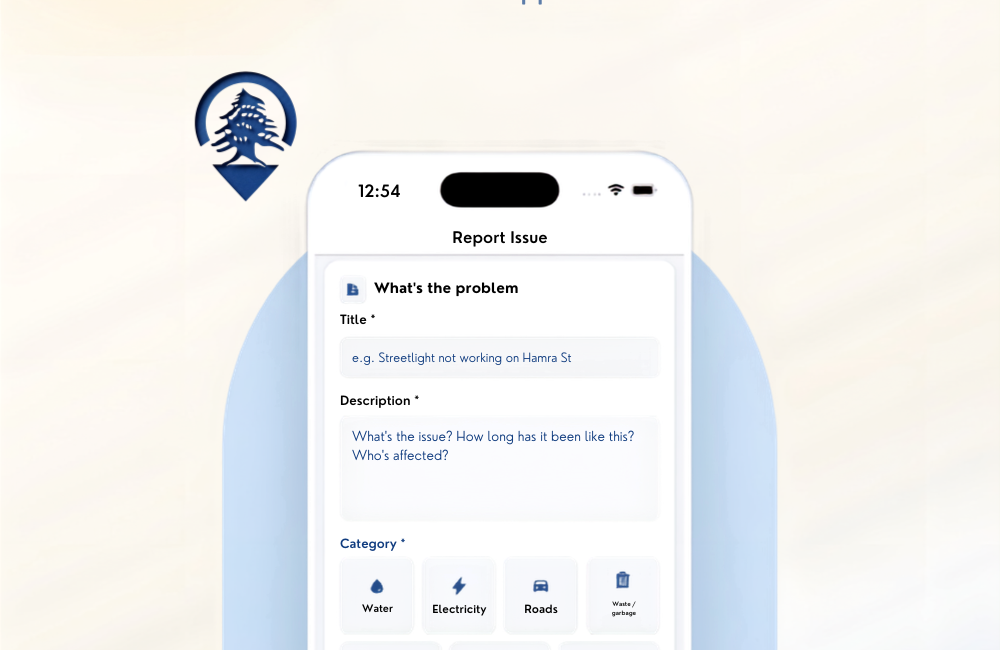
Anyone in Lebanon can open Baladi Map and put a problem on the map in under a minute, with or without an account. Reports cover the failures that shape daily life in the country: potholes, power cuts, waste and water. Citizens file in Arabic, English or French.
Once a report is submitted, it moves through public stages that run from Submitted to Fixed, so anyone can check where it stands. Residents can also back reports filed by other people, which is how the problems affecting the most neighbours rise to the top. A public scoreboard tracks which municipalities actually deliver.
Why Roy Bou Nassif Started Keeping Score
Roy Bou Nassif, a Lebanese entrepreneur, started the platform from a frustration most people in the country recognise. Something on your street is broken, everyone talks about it, and nothing moves, because there is no record, no follow-up and no accountability.
His answer was to make the record itself the product. A problem posted to Baladi Map stays publicly visible until it is resolved, which shifts the burden of explaining the delay.
Free, Non-Partisan, and Built Around the Person Reporting
Baladi Map takes no political side and charges nothing. There are no ads, no paid tiers and no data sales, a set of choices that keeps the platform's incentives away from whoever is being reported on.
Privacy is handled before anything goes live. Every published photo is automatically processed to blur faces and license plates, and every report is reviewed by a human moderator first.
74 Reports, 35 Towns, One Fix Confirmed
Since launching on the web in 2026 in three languages, Baladi Map has published 74 approved citizen reports across 35 towns, reaching from Tripoli in the north to Sidon in the south. More than 160 residents have backed each other's reports.
One entry has already reached the end of the pipeline: the first confirmed fix is on the board. Partnership talks with municipalities are under way, aimed at closing the gap between a report and a repair crew.
Baladi Map Moves to the Phone
Mobile is the next step, and it arrives this month. The iOS app is in App Store review and the Android app has entered testing on Google Play.
Both apps carry report-status notifications, so a citizen hears about it when their pothole changes state, and both allow offline reporting, a decision made for Lebanon's patchy connectivity. Automatic face and license-plate blurring applies on mobile exactly as it does on the web.
Bou Nassif puts the reasoning in one line: "Every broken streetlight has a story of ten people who gave up reporting it. Baladi Map exists so giving up stops being the rational choice; put it on the map, and it stays there until someone deals with it."
See the reports on Baladi Map.