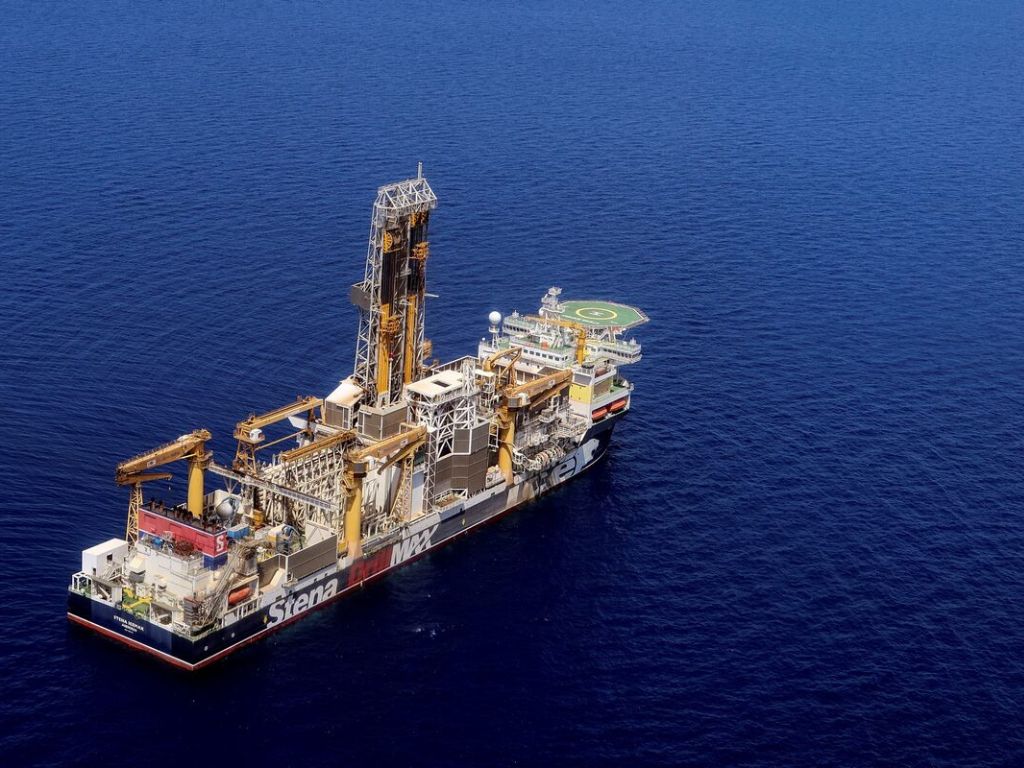
The 2022 Lebanon-Israel maritime border agreement is back at the center of regional tensions. Reuters reported on March 15 that Israel’s security cabinet had discussed repealing the deal, although no decision had been announced as of March 17.
That matters because the agreement remains one of the few formal understandings reached between Lebanon and Israel. It was brokered by the United States and entered into force on October 27, 2022. The United Nations later registered it as an international agreement under registration number 57582.
What the deal actually established
The agreement fixed the maritime boundary seaward of the coast and stated that it provides a “permanent and equitable resolution” of the maritime dispute. It also says neither side may submit new coordinates to the UN that contradict the deal unless both sides agree.
Under the arrangement, Israel retained control of the Karish field. Lebanon gained the right to pursue exploration in Block 9 and the Qana prospect, while Israel was to be remunerated separately by the Block 9 operator if commercially viable deposits extended across the boundary.
Why unilateral cancellation would be difficult
The strongest legal point is simple: boundary agreements are treated differently from ordinary political understandings. Article 62 of the Vienna Convention on the Law of Treaties says a state cannot invoke a fundamental change of circumstances to terminate or withdraw from a treaty if the treaty establishes a boundary.
The deal’s own wording strengthens that position. The text does not describe a temporary arrangement. It explicitly describes the settlement as permanent, and it ties both sides to coordinated UN submissions.
That does not mean politics cannot disrupt implementation. It means that, legally, revoking the agreement is far harder than threatening it.
Why the deal still matters economically
The agreement was meant to reduce risk around offshore gas exploration. In January 2023, Eni and TotalEnergies completed the transfer of a 30 percent stake in Blocks 4 and 9 to QatarEnergy, leaving TotalEnergies as operator with 35 percent, Eni with 35 percent, and QatarEnergy with 30 percent.
The commercial picture then became less dramatic than many had hoped. TotalEnergies said in January 2026 that the Qana well in Block 9 did not yield a positive result, although the consortium stayed in Lebanon and moved into Block 8 exploration. Reuters separately reported that the Lebanese government approved a new offshore permit for Block 8 in January 2026.
What is really at stake now
The immediate risk is political and strategic, not only legal. If the deal were seriously undermined, disputed waters could return as a practical problem, and investor risk would rise again even without a formal legal collapse. That is especially important for Lebanon, which is still trying to build credibility with international energy companies.
Three points define the current moment:
The agreement is still in force as of March 17, 2026. Reuters reported discussion in Israel, not termination.
Its legal structure is stronger than a temporary political deal because it was registered with the UN and establishes a boundary.
Its economic value now lies more in stability than in proven gas wealth, especially after the non-commercial result in Qana.
The likely near-term outcome
Based on the publicly available record, the more immediate danger is not a clean legal cancellation but growing uncertainty around the agreement during wartime. In practice, that uncertainty can still damage Lebanon by discouraging investment and pushing maritime issues back into a wider conflict agenda. This is an analytical judgment based on the current facts: no formal withdrawal, clear legal hurdles, and a highly unstable regional security environment.