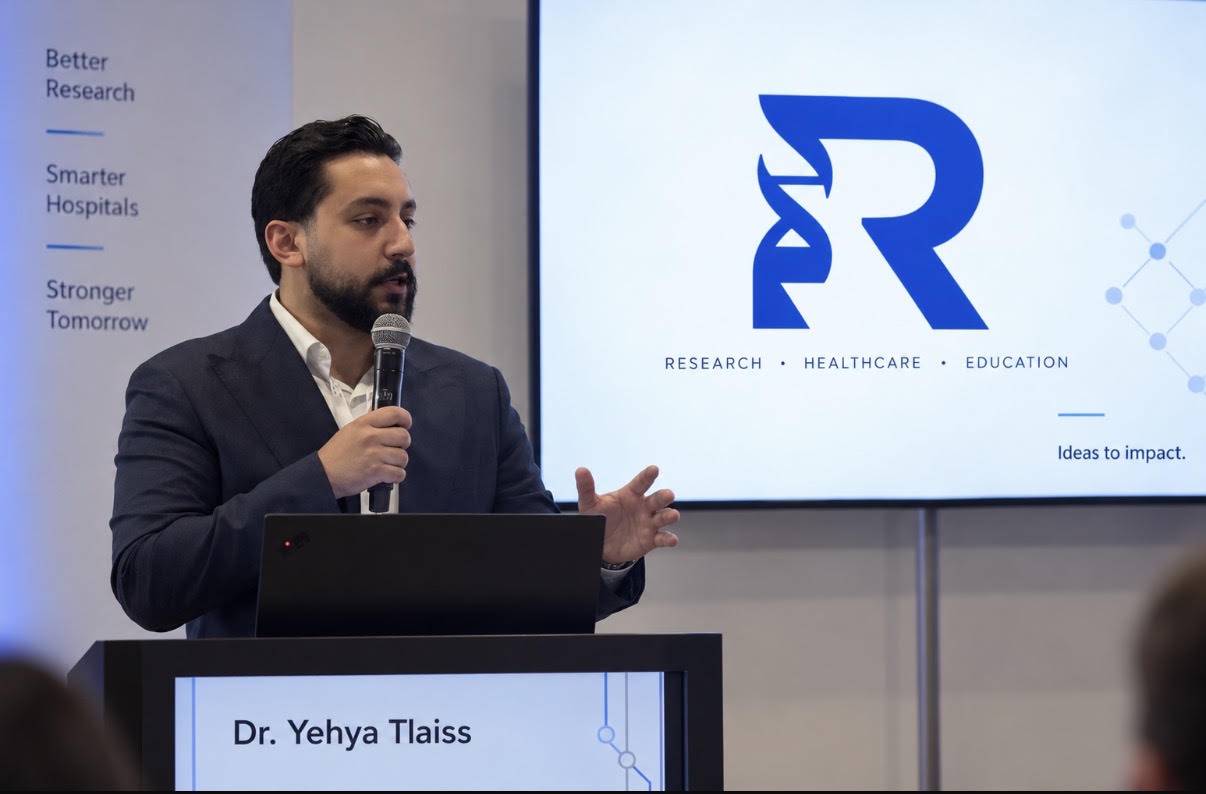
In Lebanon, medical research has never been short on talent. What it lacked was organization. Projects lived in WhatsApp groups and spreadsheets, students had no easy way to find studies to join, and nobody kept a clear record of who contributed what.
R-Chief Labs was built to fix that. Founded in 2026 by Dr. Yehya Tlaiss and headquartered in Beirut, the health tech company makes software for Lebanon and the region. It has two products: R-Chief Research, an AI-powered platform where doctors, residents and students run clinical research together, and RMR, a hospital information system that brings records, orders, theatre and billing into one place.
A problem first seen as a resident
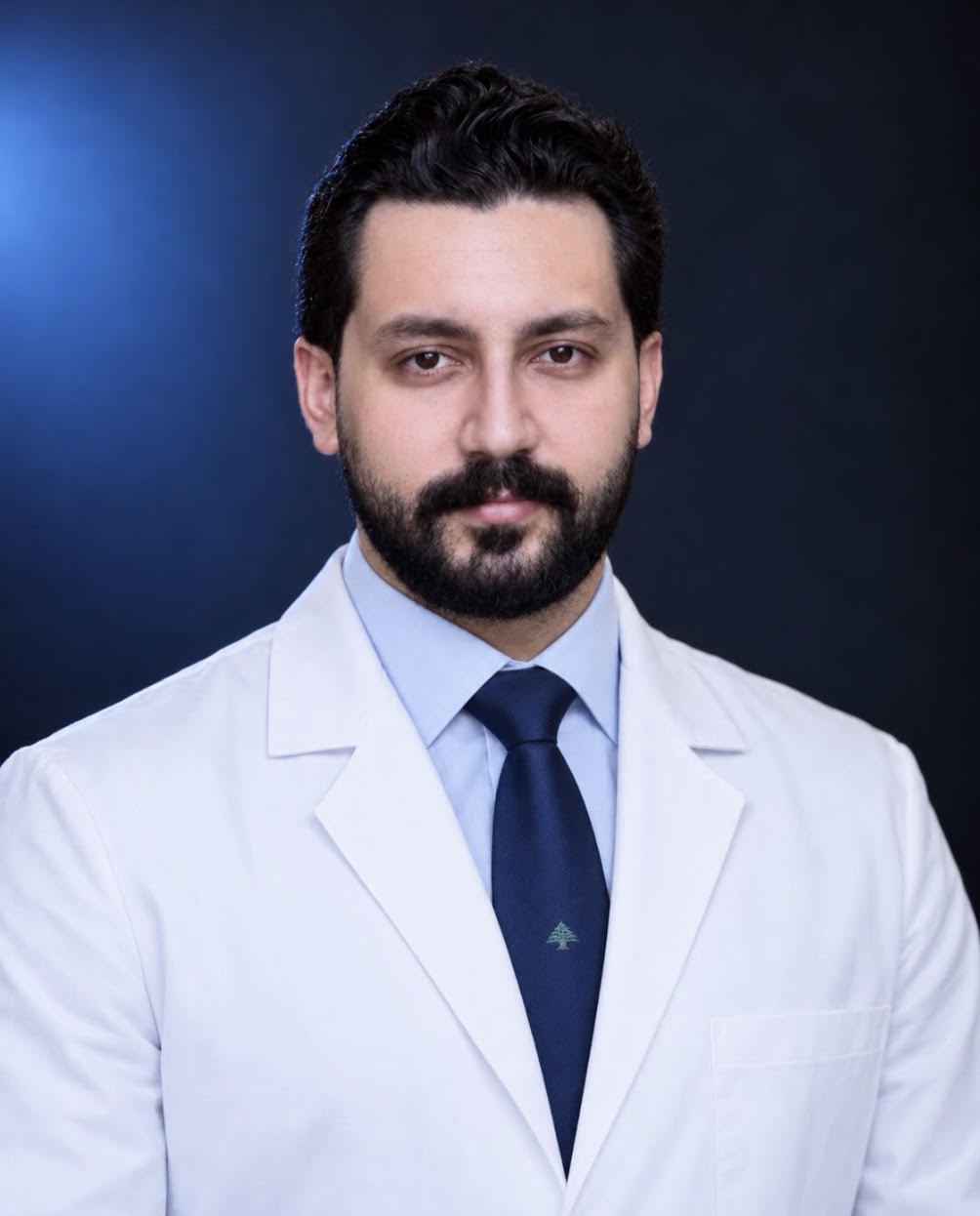
Dr. Tlaiss lived the problem from the inside. He is a physician in ophthalmology training at the University of Balamand, with more than 30 peer-reviewed publications. As a resident, he watched research projects spread across chat groups and spreadsheets. Students who wanted to take part could not find studies to join, and contributions went untracked from one stage to the next.
In 2026, he launched R-Chief Research to change that. He built it from scratch and funded the work himself. His starting point was simple: Lebanese doctors and students had the ability to do strong research, but they had no shared place to organize it.
One home for a study, from first idea to publication
R-Chief Research is a collaboration platform for medical schools, hospitals and research institutions. Departments post their research projects on it. Students and residents then discover those projects and join them.
Once a team forms, its members coordinate in one place instead of jumping between apps. Every member's contribution is tracked, from the first idea to the final publication. That gives each student and resident a clear record of the work they put in.
Department heads get a different view. They can see all research activity across their faculty at a glance, which replaces the scattered WhatsApp groups, email threads and spreadsheets that used to hold it together. R-Chief Research is available on the App Store, Google Play and the web.
From Balamand to LAU and AUB within months
The platform's first home was the University of Balamand, which remains R-Chief Labs' full institutional partner. There, the company provides both consultancy and software, and the Faculty of Medicine has adopted the platform.
Within months, in September 2026, R-Chief Research became available at the Lebanese American University (LAU) and the American University of Beirut (AUB), where it now runs as a software package. Four more universities are in talks with the company.
AUB took notice of the founder along the way. In June 2026, the university published a profile of Dr. Tlaiss on its website.
RMR: a hospital system with AI in its foundation
Working inside hospitals, Dr. Tlaiss saw the same fragmentation on the clinical side that he had seen in research. So R-Chief Labs built a second product, RMR, a full hospital information system. Deployment began in July 2026.
RMR aims to match the scope of major international platforms such as Epic, while staying accessible and affordable for hospitals in the region. Its starting argument is about age. Most established hospital systems were designed decades ago, so adding AI or research tools to them comes as an afterthought. RMR was built with both in its foundation.
Its coverage is broad. RMR handles registration and admissions, appointments, clinical documentation, order entry, the operating theatre, imaging reporting, billing and insurance, supply chain, and reporting, all inside one system.
Where the wards and the research lab connect
RMR connects directly with R-Chief Research. Because the two products were designed to work together, clinical data and research can be linked from day one rather than bolted together later.
For teaching hospitals, where the same doctors treat patients and run studies, that link is the core of the R-Chief Labs approach. The system that runs the hospital and the platform that runs its research are built by one team, for one purpose.
A self-funded first year
R-Chief Labs moved quickly in 2026. R-Chief Labs Ltd. was incorporated in the United Kingdom in February, while the team built from Beirut. R-Chief Research launched on the App Store and Google Play the same year, and was adopted by the University of Balamand Faculty of Medicine.
By June, AUB had profiled the founder. In July, RMR deployment began. By September, R-Chief Research was available at LAU and AUB, and four more universities are now in talks. All of it was self-funded.
"Lebanese healthcare deserves better"
For Dr. Tlaiss, the mission is about access as much as software. "Research in Lebanon was a privilege of the few with the right connections, so I built R-Chief to break that monopoly," he said. "Then I built RMR, because our doctors deserve world-class hospital systems and have never been offered them. Lebanese healthcare deserves better, and we're building it."
In its first year, R-Chief Labs has put research software running at three Lebanese universities and a hospital system into deployment, with the two designed to work as one.
Explore R-Chief Research and RMR at rchief.com.
 R-Chief Labs