The Case for Arriving Early
The pitch Emirati executives made in Beirut this week was not that Lebanon has fixed itself. It was that waiting until it does means arriving too late. Mohamed Yusuf Adam, vice president of UAE investment group National Pulse, told the Lebanese-Emirati Economic Forum that investors should not hold off until the country's economic and security problems are fully resolved, arguing that economic cooperation itself creates reasons for stability rather than the other way around.
Adam said companies that build partnerships now will be better placed than those arriving once the recovery is further along, and stressed that the relationship should not run in one direction only. That argument carried the largest Emirati business delegation to visit Lebanon in years through two days of meetings, and it left behind five memorandums of understanding, a new joint business council and a list of sectors where nothing has been signed yet.
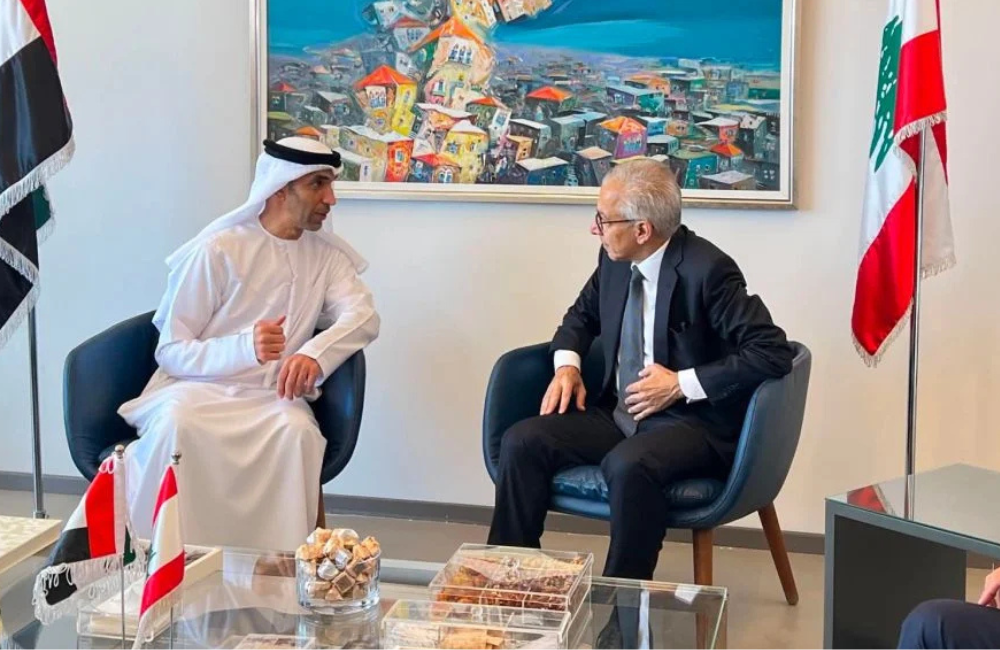
The forum opened on Wednesday, August 26, at the Arena Seaside Pavilion, with agreement signings, the first meeting of the Joint Business Council and roundtables on infrastructure, reconstruction and investment. Estimates of the delegation's size varied by outlet, running from more than 70 business leaders and officials to close to 90. Bilateral meetings on the sidelines were reported to have brought together around 50 Emirati businesspeople and roughly 120 Lebanese counterparts. Some of the visiting executives had been in the country since the previous week, looking at specific opportunities before the forum opened.
Thani bin Ahmed Al Zeyoudi, the UAE Minister of State for Foreign Trade, led the delegation. The visit was organized with the Lebanese Economic Organizations, chaired by former minister Mohammad Choucair, who described the Emirati turnout as a message of support and confidence in Lebanon.
What the Memorandums Cover
The first of the five agreements created the Lebanese-Emirati Joint Business Council. Two more linked the Chamber of Commerce, Industry and Agriculture of Beirut and Mount Lebanon with its counterparts in Abu Dhabi and Ras Al Khaimah.
Elite Agro Holding, a UAE agriculture group, signed the remaining two. One is with the American University of Beirut and covers food security and farming in arid conditions. The other is with Lebanese agricultural business Jarjoura Dakkache & Sons and covers greenhouse crops.
Infrastructure and digitization came up repeatedly in the talks but produced no agreements. That gap is worth noting, because those are exactly the areas Lebanese officials have been pitching hardest, from customs systems at the airport and seaports to digital government services.
The $4.2 Billion Starting Point
Non-oil trade between the two countries reached $4.2 billion in 2025, up 35.6 percent year on year, according to figures Al Zeyoudi presented at the forum. The commercial relationship kept working through years when the political one did not, which is the practical case both sides are building on.
Al Zeyoudi told the room that the UAE's 38 trade agreements give access to more than 3.5 billion consumers, and invited Lebanese companies to use that network. He named logistics, food security, agriculture, healthcare, energy, aviation, artificial intelligence and tourism as areas with room to grow, and pointed to the large Lebanese community already working in the Emirates as a ready bridge between the two business communities.
What Lebanon Put on the Table
"Today, I propose that we begin to explore a specific economic partnership framework between Lebanon and the Emirates," said Amer Bisat, Lebanon's Minister of Economy and Trade, at the opening. "Lebanon has fallen far behind in this area," he conceded.
Bisat set out four priorities: unlocking the country's productive capacity through its private sector and its people, advancing banking, fiscal and public sector reforms, keeping the recovery private sector led, and building that dedicated partnership framework around trade, investment and knowledge transfer. He also raised reforms and the state's exclusive control of weapons, a line that drew applause from the room.
Industry Minister Joe Issa El Khoury made the pitch in blunter terms. "Lebanese industrialists ... don't just need support: They are an opportunity that deserves investment," he said. Kamal Shehadi, Minister of State for Technology and Artificial Intelligence, argued for technology and the digital economy as pillars of the relationship, including a longer term idea of a shared digital market.
The Numbers Working Against It
The World Bank expects Lebanon's economy to contract 6.4 percent in 2026 after renewed conflict interrupted a fragile recovery. The economy grew an estimated 4.2 percent in 2025, its strongest year since the crisis began in 2019. Inflation is projected at 17.5 percent this year, public debt remains unsustainable and restructuring talks have not started.
After a February 2026 mission, the IMF said Lebanon needs a bank restructuring strategy built on international principles, plus a fiscal framework capable of restoring debt sustainability. Both institutions tie any serious increase in investment to reform rather than to warmer diplomacy.
How the Two Sides Got Here
Relations had been cold for years. The UAE banned its citizens from traveling to Lebanon in August 2023, and the thaw only picked up after Joseph Aoun was elected president in January 2025. During his visit to the Emirates that spring, Abu Dhabi announced it would lift the ban, and the two governments agreed to identify joint opportunities and set up a business council.
Travel formally reopened on June 29, 2026, with UAE nationals required to register through the Twajudi service. Two days before the forum, UAE Deputy Prime Minister and Foreign Minister Sheikh Abdullah bin Zayed Al Nahyan spoke with Prime Minister Nawaf Salam and repeated Emirati support for Lebanon's security, stability and sovereignty.
The Council Is Now the Test
Abdulaziz Mohammed Al Shamsi, assistant director general of the Sharjah Chamber of Commerce and Industry, said the new council will build an investment road map to identify and open opportunities across Lebanon. Hamad Buamim, the Emirati co-chair of the council, said tangible partnerships now need to come out of it. That road map is the part worth watching, because a council and five memorandums are commitments to look, not commitments to spend.
On Thursday the delegation met President Aoun and Speaker Nabih Berri at Ain el-Tine, alongside Bisat, Choucair, UAE Ambassador Fahad Salem Al Kaabi and Lebanon's ambassador to the UAE, Tarek Mneimneh. Mneimneh said in July that investor appetite was real, but that reforms and security guarantees would decide whether it becomes capital. How much of this week converts into money is the number Lebanon will be measured on, not the size of the delegation.