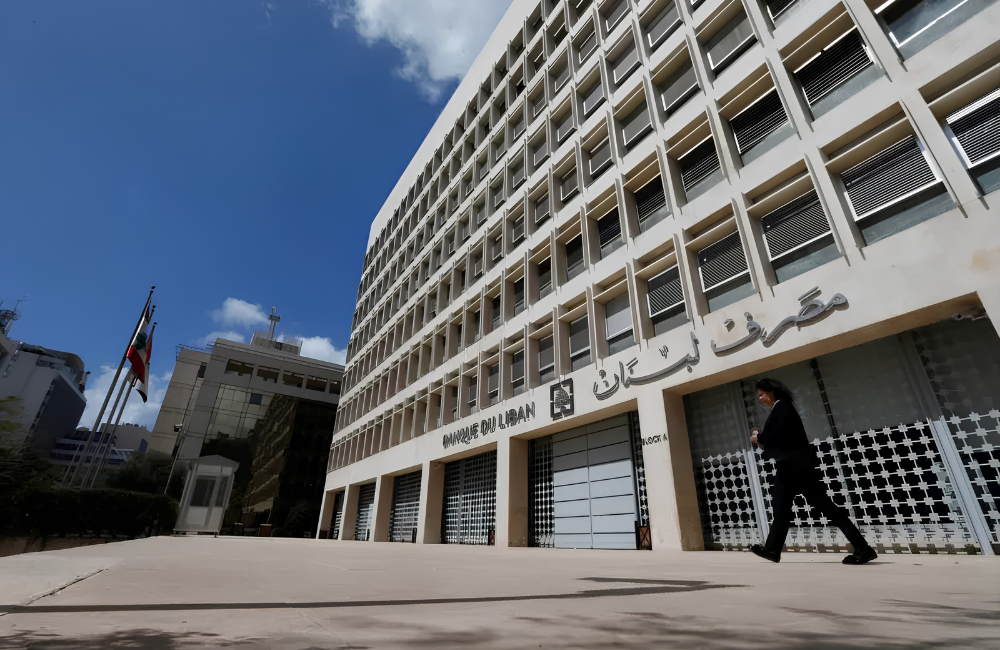
It takes 25 billion Lebanese pounds to open an exchange house in Lebanon under the country's new rules, and 150 billion to run one that ships cash across the border and moves money by hawala. Banque du Liban governor Karim Souaid signed Basic Decision No. 13837 on 18 August 2026, following a Central Council session held the day before. Issued to the sector as Basic Circular No. 6, the text runs to 36 articles and 14 annexes and takes effect once it is published in the Official Gazette.
Exchange institutions are licensed under Law No. 347 of 6 August 2001. What has governed them in practice since is a stack of separate circulars, and Decision 13837 sweeps all of it away.
Six Circulars Cancelled, One Text in Their Place
Article 35 repeals six basic decisions outright. They include Decision 7933 of September 2001, which carried the implementing regulation for Law 347 and had been the backbone of the sector for a quarter of a century, along with Decision 10853 of 2011 on exchange house capital and Decision 13236 of 2020 on the electronic platform for exchange operations.
Also cancelled is Decision 9708 of September 2007, which covered cash transfers under the hawala system. Those rules now sit inside the new text, considerably expanded.
Four Licences and What Each One Buys
Article 3 divides the sector into two base categories and two add-on services.
Category A covers buying and selling foreign currencies against other currencies or against the Lebanese pound, in notes or coins, plus buying and selling precious metals and precious metal coins, acting as an agent for electronic payment service providers, and marketing prepaid cards to clients.
Category B is narrower. It allows currency buying and selling and agency work for payment providers, but limits dealing in coins and precious metals to quantities under 1,000 grams.
Two further services sit on top. Item A1 is cross border transportation of cash and precious metals, meaning import and export to and from Lebanon. Item A2 is the Informal Money Transfer Service, or IMTS, which the decision defines plainly as the hawala. Only a Category A institution can apply for either, and only with a separate licence, a cumulative capital increase and payment of the annual fee attached to that service.
Capital Floors Rise Sharply
Article 6 sets the minimum capital for each category, and states that the requirements are cumulative:
Category A: 25 billion Lebanese pounds
Category A1: 100 billion Lebanese pounds
Category A2: 25 billion Lebanese pounds
Category B: 10 billion Lebanese pounds
At the official rate of 89,500 pounds to the dollar, that is roughly $279,000 for a Category A licence, $112,000 for Category B, and about $1.12 million for the cash shipping add-on. A Category A house holding both add-ons needs 150 billion pounds, or close to $1.68 million.
Capital must be subscribed in a single payment at BDL within three months of the licence being granted, by cheque or bank transfer for A1 institutions and in cash by bank cheque for A, A2 and B. Missing that deadline exposes the institution to licence withdrawal. Funds go into a special frozen, non interest bearing account opened at the central bank in the institution's name, and are released only after the legal documents are registered with the relevant departments. Any increase or reduction of capital needs prior approval from BDL's Central Council.
An institution that takes losses has six months to either rebuild its capital or reduce it, provided it stays at or above the required floor.
An Annual Fee With a January Deadline
Article 15 introduces a cumulative annual fee: 250 million pounds for Category A, 500 million for A1, 250 million for A2 and 50 million for Category B. It is paid first when the licence is granted, then before 31 January every year, on pain of losing the licence for that category.
Houses already on BDL's published list must pay the 2026 fee before 31 December 2026 or be struck off.
Ownership Restricted to Lebanese Hands
Legal form is now prescribed by category. A1 institutions must be joint stock companies. Category B may be set up as a sole proprietorship, which is restricted to Lebanese natural persons actually and permanently resident in Lebanon. Management of any exchange institution is restricted to the same group.
Joint stock exchange houses must issue registered shares, with at least two thirds owned by Lebanese natural persons, Lebanese partnerships whose partners are all Lebanese natural persons, or Lebanese joint stock companies with registered shares that are themselves two thirds Lebanese owned. Article 5 goes further and requires that the ultimate beneficial owner behind those two thirds be a Lebanese natural person at every layer, and expressly bans building a chain of intermediary companies to obscure who that is.
Under Article 7, any transfer that takes a person to 5 percent or more of a company's shares or units, directly or indirectly, needs prior Central Council approval. Holdings by a spouse, minor children and any economic group with ownership, management or family ties are counted together toward that 5 percent. Inheritance is not treated as a transfer, but BDL must be notified within three months of the death.
Founders, shareholders, partners, board members and managers must meet fit and proper criteria set out in Annex 1: no cases under Article 127 of the Code of Money and Credit, no listing on national, UN or international sanctions lists, good performance and reputation, experience matched to the category applied for, and financial soundness. Sources of funds must be legitimate and clearly traceable.
A Long List of Things Exchange Houses Can No Longer Do
Article 8 is the longest in the decision and is organised into five sets of prohibitions.
On scope, exchange institutions may not operate before obtaining the licence and fully subscribing capital, may not carry out financing, lending, fund management, loans, facilities, guarantees or client financing, and may not perform electronic payment operations covered by Decision 13790 of 9 January 2026 except as an agent. They are barred from issuing, dealing in or facilitating dealing in virtual assets except as BDL may later allow, and from creating, developing or operating any electronic applications.
On client relationships, they may not deposit cash directly into clients' bank accounts, take deposits or open deposit accounts of any kind including temporary ones, accept powers of attorney from clients, or hand customers defective or damaged notes.
Financial dealings with companies or mutual funds holding bearer shares are prohibited, as is dealing with correspondents that are not properly licensed in their own country. Opening branches abroad is banned, and so is dealing with any exchange institution outside Lebanon connected by kinship up to the second degree to one of the owners or officers.
Banking arrangements are tightened too. Operations must run through the institution's own accounts, never a partner's or shareholder's personal account. Lebanese pound facilities from banks and financial institutions are prohibited, and foreign currency facilities are capped at the equivalent of 50 percent of capital at any time. An exchange house may not open an account at a bank where any owner, partner, shareholder, manager or authorised signatory already holds a personal account, with spouses, ascendants and descendants treated as the same person where they are dependants.
Cameras, Ten Year Records, and Software That Screens Names
Premises must be fully separate from any other commercial or professional activity and properly equipped with operational, technical and security features. BDL and the Banking Control Commission can object to the premises and force a move, on pain of licence withdrawal. Only the licensed name may appear on the sign, and no other trade name or mark is allowed. Cameras must cover the head office and every branch, including the counter, the cash desk and the safe, with recordings kept for at least six months.
Article 16 sets out the operating controls. Customer identity must be verified against approved documents, enhanced due diligence applies to high risk customers, transactions, countries and activities, and no operation may proceed if identification or the source of funds cannot be established.
Accounting software has to do more than bookkeeping. It must record every currency and precious metals trade, issue serially numbered receipts, complete the RF1-A form attached to Decision 13769 of 14 November 2025, score customer risk using a risk based approach, automatically screen customer names against global, national and UN sanctions lists, and produce the balance sheet, profit and loss statement, transaction schedule, cash and bank balances and currency and metals positions instantly and daily.
Records on customers and operations must be kept for at least ten years. If an institution stops operating for any reason, its legal representative or liquidator stays responsible for keeping those records for the remainder of the period and must tell BDL where they are held.
The Rate on the Board Is Now the Rate
Article 17 requires continuous, clear display of buying and selling rates for every currency traded, on a board or electronic display placed where customers can easily see it, and on the institution's website if it has one. Rates must be updated the moment they change.
One clause has real teeth for customers. An exchange house may not execute at a rate different from the one announced, unless the rate actually applied is better for the customer than the posted one.
Hawala Gets Hard Limits
Article 26 governs the A2 licence. Applicants must supply a letter of intent or signed contract with the foreign correspondent, that correspondent's valid licence, its AML and counter terrorism financing procedures, and the identity of its owners and beneficial owners.
The operational conditions are specific. Transfers must be executed in cash or by netting with correspondents, and the beneficiary may not be paid by netting, cheque or bank transfer into their account. Monthly caps per client are set at $20,000 for personal transfers and $200,000 for commercial transfers, incoming or outgoing. Sender and beneficiary identity, purpose of transfer and source of funds must be verified before execution, and dedicated IMTS records with copies of clients' official documents must be kept for at least ten years.
Clearing with foreign correspondents runs through a sub account of the institution's main bank account. Where that account cannot be opened, cash clearing is permitted only against supporting documents, which the decision lists: the customs cash declaration made at an official crossing, a power of attorney from the correspondent to the person carrying the money, a copy of the entry visa matched against the dates on the receipts, and anything else that establishes the source and path of the funds.
Unclaimed money gets its own procedure. If a beneficiary has not collected a transfer 30 days after it was sent, the institution must tell the sender clearly, coordinate with the correspondent to recover the principal, and inform the sender of the right to claim a refund within three months of sending. Once the legal prescription period passes, 50 percent of the money goes to the Lebanese State and the balance is booked to the institution's profit and loss account as non distributable profit.
Cash Shipping Under a Separate Regime
A1 institutions face the heaviest requirements. Beyond the 100 billion pound capital floor, they must appoint an auditor from among globally recognised firms, keep separate accounting entries for shipping operations, appoint an internal audit officer who files monthly reports covering audit work, the effectiveness of internal controls, key risks and the effectiveness of due diligence, and maintain a disaster recovery plan.
Reporting is monthly and granular. For every currency and every metal, A1 houses must file the total volume of shipments to and from Lebanon, the number of shipments, the total volume of cash and precious metals moving inside Lebanon between exchange institutions and BDL supervised entities, and every domestic movement worth $10,000 or more. Those filings are due within ten days of month end whether or not any operations took place.
Compliance Cannot Be Outsourced by Category A
Every exchange institution must appoint a compliance officer or compliance unit sized to its business, and keep that person in continuous AML and counter terrorism financing training or holding a specialised certification such as CAMS. Category A institutions, including those with A1 and A2 licences, are barred from outsourcing the function. Category B may outsource it on its own responsibility, provided the third party reviews the institution's operations daily.
Internal compliance reporting runs monthly for A1 and A2 services, quarterly for Category A and semi annually for Category B. Financial statements follow the same logic: monthly positions for A1, quarterly for Category A, semi annual for Category B, filed within twelve days of the cut off date, plus audited annual statements by the end of April each year.
Applicants must also produce a feasibility study covering at least three years of projections, prepared with a local or international audit or consulting firm, and refreshed for each additional licence. Insurance is mandatory, from a licensed Lebanese insurer that reinsures internationally, covering theft, breach of trust, fire and other risks, with signed policies filed annually.
Fines Start at 500 Million Pounds
Article 29 empowers the Central Council to impose a fine of not less than 500 million pounds, around $5,600 at the official rate, for each violation. Separately, BDL and the Banking Control Commission can recommend referring an institution to the Higher Banking Commission for the penalties in Article 18 of Law 347.
Striking off follows liquidation, bankruptcy, failure to actually start operating within six months of listing, a six month suspension of activity, a finding by the Higher Banking Commission that the institution can no longer continue, or failure to restore capital to the minimum within the granted deadlines. Article 32 goes further and treats any breach of the decision as the offence set out in Article 770 of the Penal Code, which BDL may prosecute before the competent court.
The Clock Already Started
Houses licensed before the decision fall under it automatically and have one year from its issuance to comply fully. Applications to increase capital, with complete supporting documents and no gaps, must be filed within six months of publication in the Official Gazette, or the licence is withdrawn. The Central Council can grant extra time in exceptional cases on a reasoned request.
One deadline is already fixed. Institutions that previously told BDL they carry out IMTS transfers must file the full A2 documentation with the central bank and the Banking Control Commission by 30 November 2026.