TL;DR
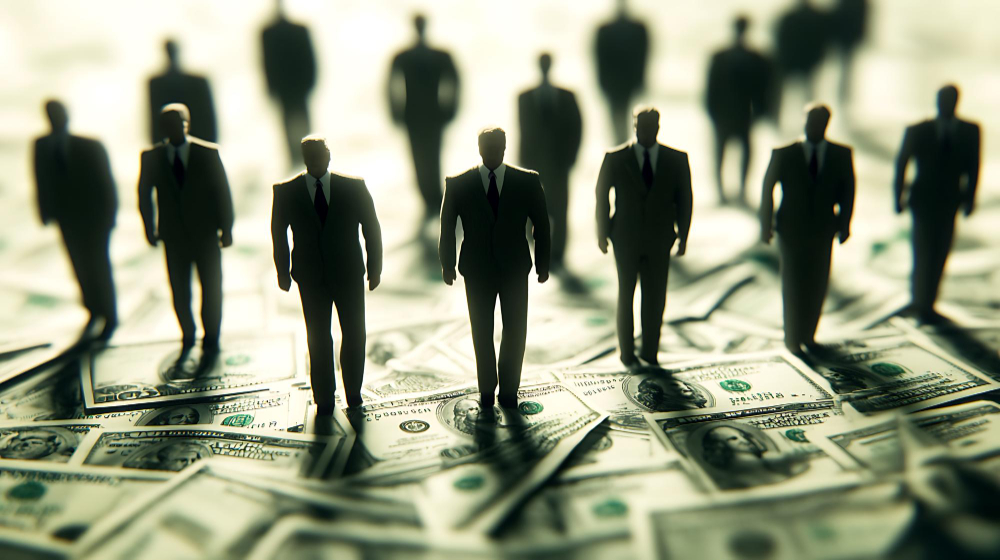
The U.S. remains the world’s largest billionaire base by count and total net worth, followed by China and India.
Germany and Russia stay in the top five, while Taiwan enters the top ten—reflecting the electronics manufacturing wealth engine.
These rankings aren’t just “rich lists.” They map where capital markets, tech, and industrial scale are concentrating wealth.
The figures below are based on Forbes’ billionaire data as of March 1, 2026 (as published in its 2026 countries-by-billionaire-count breakdown).
Top 10 countries by number of billionaires (2026)
Here’s the ranking, with the total billionaire count, total billionaire net worth, and the richest person listed for each country/territory:
United States — 989 billionaires | $8.4 trillion total net worth | Elon Musk (est. $839B)
China — 539 | $2.2 trillion | Zhang Yiming (est. $69.3B)
India — 229 | $1.0 trillion | Mukesh Ambani (richest in-country, per Forbes list context)
Germany — 212 | $1.0 trillion | Dieter Schwarz (est. $67.2B)
Russia — 147 | $649B | Alexey Mordashov & family (est. $37B)
Italy — 89 | $483B | Giancarlo Devasini (est. $89.3B)
Canada — 82 | $457B | Changpeng Zhao (est. $110B)
Hong Kong — 71 | $420B | Robin Zeng (est. $53.2B)
Brazil — 70 | $265B | Eduardo Saverin (est. $35.9B)
Taiwan — 66 | $245B | Terry Gou (est. $15.3B)
What these rankings actually tell you
A list like this is easy to treat as trivia. But the top ten has a few real signals that matter for markets and businesses:
1) The U.S. is still the default wealth compounding machine
The U.S. doesn’t lead because it has “more rich people.” It leads because it has:
the deepest public markets,
the broadest venture and private capital stack,
and the most mature pathways for companies to scale, list, and consolidate.
When those pipes work well, wealth creation becomes repeatable.
2) China’s billionaire base remains massive—despite cycles
China stays second by count and total billionaire net worth, supported by the scale of its tech sector and manufacturing ecosystem.
Even when sentiment swings, a large industrial and platform economy continues producing founders and controlling shareholders.
3) Taiwan’s entry is not cosmetic—it’s the “hardware economy” effect
Taiwan entering the top ten is a reminder that global tech wealth is not only software. Electronics manufacturing dominance compounds into billionaire creation through ownership stakes across supply chains and export-driven giants.
4) Germany and Italy show how old-economy scale still creates new-economy wealth
Germany’s presence is anchored by industrial and retail empires as much as by tech. Italy’s ranking is another sign that wealth concentration often sits in:
durable consumer businesses,
finance-linked holdings,
and platform-like infrastructure companies.
5) The “richest person” names show where the decade’s upside has been
A quick glance at the richest individuals listed points to the sectors that have dominated:
tech platforms and mega-scale holdings (U.S., China),
electronics and industrial wealth (Taiwan, parts of Asia),
and finance/crypto-linked fortunes where regulation and market cycles play a major role (Canada, Italy).