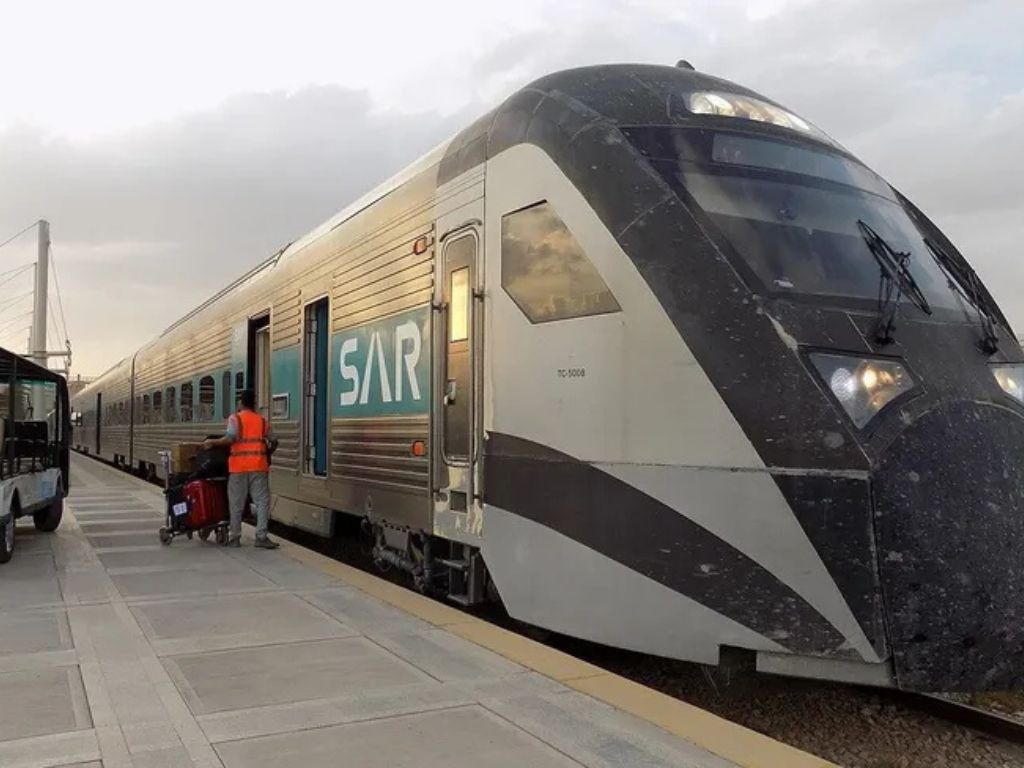
Saudi Arabia is accelerating its search for alternative trade routes as disruption in the Gulf pushes governments and logistics operators to rethink cargo movement. The latest step is a new freight rail corridor operated by Saudi Arabia Railways (SAR) that links the Kingdom’s eastern ports to Al Haditha, the main land crossing with Jordan.
The new route is the second logistics corridor announced by the Kingdom within days. On March 12, Transport Minister Saleh Al-Jasser launched the Logistics Corridors Initiative to redirect containers and cargo from eastern and Gulf ports toward Saudi ports on the Red Sea, especially Jeddah Islamic Port.
Why the corridor matters now
The timing is strategic. The Hormuz crisis has disrupted normal shipping patterns and forced governments across the region to build alternatives on land and rail. Saudi officials have framed the new corridors as a resilience tool designed to keep trade moving even as maritime risk rises.
The rail link to Jordan matters because it gives Saudi Arabia a faster overland route into the Levant and northern markets, while also reducing dependence on congested or insecure sea lanes. It fits into a broader Saudi ambition to position itself as a regional logistics hub under Vision 2030.
What Saudi Arabia is building
Saudi Arabia already has the physical network to support this shift. SAR’s North Train Passenger line runs about 1,250 kilometers from Riyadh to Al Haditha near the Jordanian border, while the broader North Railway network stretches 2,750 kilometers.
The current policy push is about using that infrastructure more aggressively for freight and multimodal cargo. Saudi officials say the logistics corridors are meant to:
redirect cargo from eastern and GCC ports toward safer inland and Red Sea routes
improve supply chain efficiency and customs coordination
preserve trade flows during maritime disruption
A regional trade strategy, not just an emergency response
This is more than a temporary workaround. The Saudi government has spent several years expanding logistics zones, ports, and intercity rail as part of a wider diversification plan. SAR says it is the sole owner and operator of all intercity rail infrastructure in the Kingdom, while the transport ministry has repeatedly described logistics as a pillar of long-term competitiveness.
That gives the new corridor significance beyond the current crisis. It shows how Saudi Arabia is turning existing infrastructure into a strategic buffer, using rail and land links to absorb shocks that once would have hit ports and shipping more directly.
What it means for regional commerce
The corridor does not replace Gulf shipping. But it does change the risk equation. Faster inland freight routes can help protect cargo continuity, support cross-border trade with Jordan, and create a more flexible logistics map across the Middle East.
In that sense, the corridor is both a short-term response to Hormuz disruption and a long-term signal of how Saudi Arabia wants to shape regional trade: less exposed to chokepoints, more integrated by rail, road, and port networks.