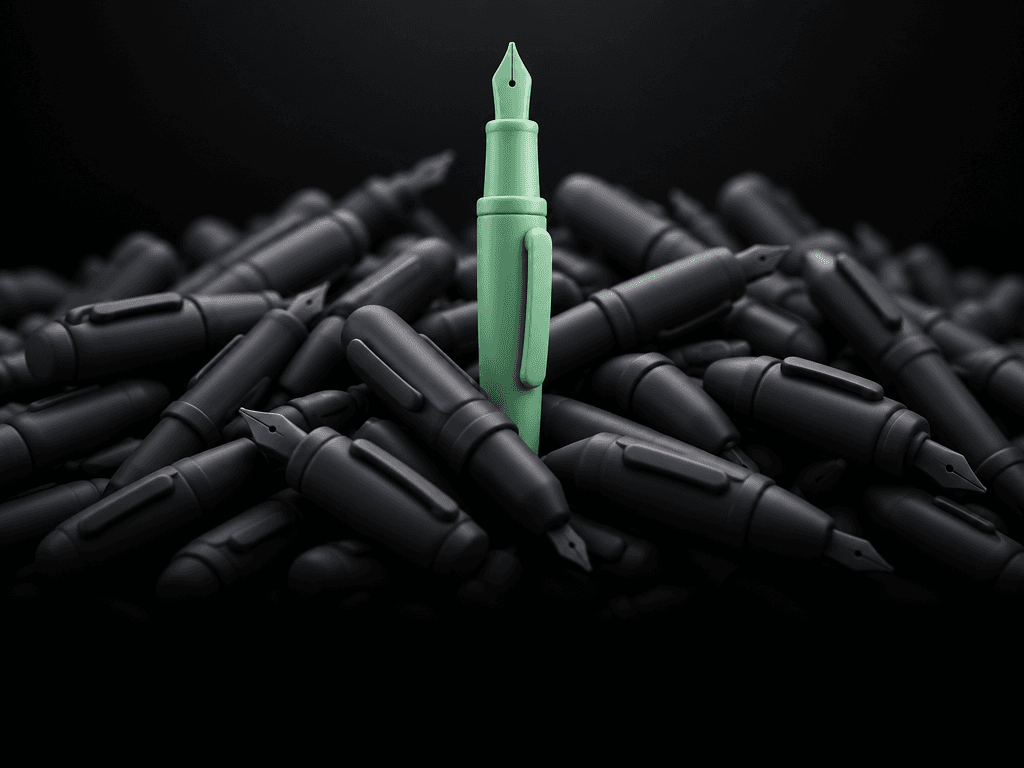
Paul Graham’s “maker’s schedule, manager’s schedule” explains a lasting workplace conflict.
Managers often treat time as a series of short meeting slots.
Makers need long blocks of uninterrupted focus to produce meaningful work.
A short meeting can break the mental flow needed for writing, design, coding, and strategy.
Better workplaces protect both collaboration and deep work.
Why the Maker vs. Manager Schedule Still Matters
Most workplace conflicts over meetings start with a simple misunderstanding: not everyone experiences time the same way.
Managers usually work through short blocks. Their calendars fill with check-ins, decisions, calls, updates, and reviews. For them, a 30-minute meeting often feels like a practical use of time.
Makers experience time differently. Writers, designers, developers, analysts, strategists, and researchers often need long, uninterrupted blocks to do their best work. A meeting does not just take time. It can split the day, weaken concentration, and make serious creative work harder to restart.
Paul Graham gave this conflict its clearest name in his 2009 essay, “Maker’s Schedule, Manager’s Schedule.” He argued that managers often divide the day into one-hour intervals, while makers think in larger blocks, often half-days.
“A single meeting can blow a whole afternoon,” Graham wrote.
That sentence still explains why the idea remains relevant across offices, startups, remote teams, agencies, and creative businesses.
The Manager’s Schedule
The manager’s schedule runs on coordination.
Managers need to speak with people, resolve issues, review progress, approve decisions, and keep work moving across teams. Their value often depends on fast context switching.
A typical manager’s day may include:
One-on-one meetings
Team updates
Client calls
Hiring interviews
Budget reviews
Cross-functional planning
Quick decision-making
For managers, meetings often create momentum. A calendar full of short blocks can feel efficient because each conversation moves a different issue forward.
The problem starts when that same schedule becomes the default for everyone.
The Maker’s Schedule
The maker’s schedule runs on depth.
A designer needs time to explore a concept. A writer needs time to shape an argument. A developer needs time to hold a complex system in mind. A strategist needs time to connect ideas that do not appear instantly.
These forms of work rarely fit into 30-minute gaps.
Creative and technical work often requires a slow start, a period of immersion, and enough uninterrupted time to reach flow. Once a meeting breaks that process, the maker may lose more than the meeting itself.
The visible cost is 30 minutes. The hidden cost is the time needed to rebuild focus.
Why Meetings Create More Damage Than They Show
Meetings can help teams align. They can also quietly destroy the conditions required for high-quality work.
Harvard Business Review has reported that executives spend far more time in meetings than they did decades ago, with one study noting an average of nearly 23 hours a week, compared with less than 10 hours in the 1960s.
Microsoft’s Work Trend Index also shows how modern work fragments attention. Its research tracks global workplace patterns through surveys and productivity signals, including meeting habits, communication load, and focus pressure.
A 2025 Microsoft report found that half of meetings take place during two high-value windows, 9 a.m. to 11 a.m. and 1 p.m. to 3 p.m., which often overlap with natural productivity peaks.
That matters because teams often schedule meetings at the exact hours when makers may do their best thinking.
The Real Conflict Is Not Meetings vs. Work
The maker vs. manager schedule is not an argument against meetings. It is an argument against treating every kind of work as interchangeable.
Some work needs conversation. Some work needs silence.
The best organizations understand that both are legitimate. They do not force makers to defend focus as if it were a personal preference. They treat deep work as infrastructure.
A workplace that protects maker time usually does a few things well:
It groups meetings into specific windows
It avoids scattered calls across the entire day
It gives makers blocks of protected focus time
It challenges recurring meetings that no longer serve a purpose
It uses written updates when live discussion adds little value
It gives people permission to decline low-value meetings
These practices help managers coordinate without turning every calendar into a series of interruptions.
Remote Work Made the Problem More Visible
Remote and hybrid work did not create the maker-manager conflict. It exposed it.
Digital calendars made meetings easier to schedule. Messaging apps made interruptions easier to send. Video calls made quick alignment possible, but they also made over-meeting easier to normalize.
A team can now interrupt a designer, writer, or developer without walking across an office. The friction disappeared, but the cognitive cost remained.
That is why remote teams need clearer rules around time. Without them, flexibility can turn into permanent availability.
What Leaders Should Do Differently
Leaders do not need to eliminate meetings. They need to manage the cost of meetings more honestly.
A 30-minute meeting may look small on a calendar, but it can break a four-hour creative block. The better question is not, “Is everyone available?” The better question is, “What kind of work does this person need to do today?”
Strong managers protect their team’s attention because attention produces the work that meetings exist to support.
The most effective approach combines structure and trust. Teams can set meeting windows, create no-meeting mornings, reserve deep work days, and shift routine updates into written formats.
The goal is not silence. The goal is rhythm.
A Better Way to Think About Time
The maker vs. manager schedule remains evergreen because it names a problem every workplace still faces. People who manage work and people who make work often live on different calendars.
Neither schedule is superior. Both serve a purpose.
The real leadership challenge lies in designing a workday where coordination does not crush creation. When organizations protect deep work, meetings become more useful, creative output improves, and people regain control over their best hours.