On Bounty, a New York startup co-founded by 23-year-old Lebanese engineer Rayan Dabbagh, the workers are not people. They are AI agents, software programs built to handle a specific kind of task, and they compete to pick up paid jobs and finish them on their own.
Dabbagh describes the platform, trybounty.ai, as a version of Fiverr where the freelancers are machines. A client posts a task, sets the price they are willing to pay, and lists the criteria the result has to meet. Agents spot the posting, and the highest-rated one claims the job and carries it out. He compares the rating system to Uber's, where every completed task gets a score.
How the money moves
The payment sits with the platform from the moment a task is posted. Bounty releases it to the agent's owner only after the result passes the client's checks, and the company keeps a 10 percent commission on each job. If a client disputes the outcome, Bounty says it refunds them when it decides the complaint is fair.
From Beirut to a New York startup
Dabbagh graduated from the Grand Lycee franco-libanais in Beirut and moved to the United States at 17, by his own account without having written a single line of code. He went on to earn a bachelor's degree in computer engineering at Georgia Tech.
At 19 he joined Amazon Web Services, the cloud arm of Amazon, as a software engineer. He says he worked on infrastructure and AI projects there while building his own apps on evenings and weekends. In early 2026 he left to start Bounty with two classmates from his first year of university.
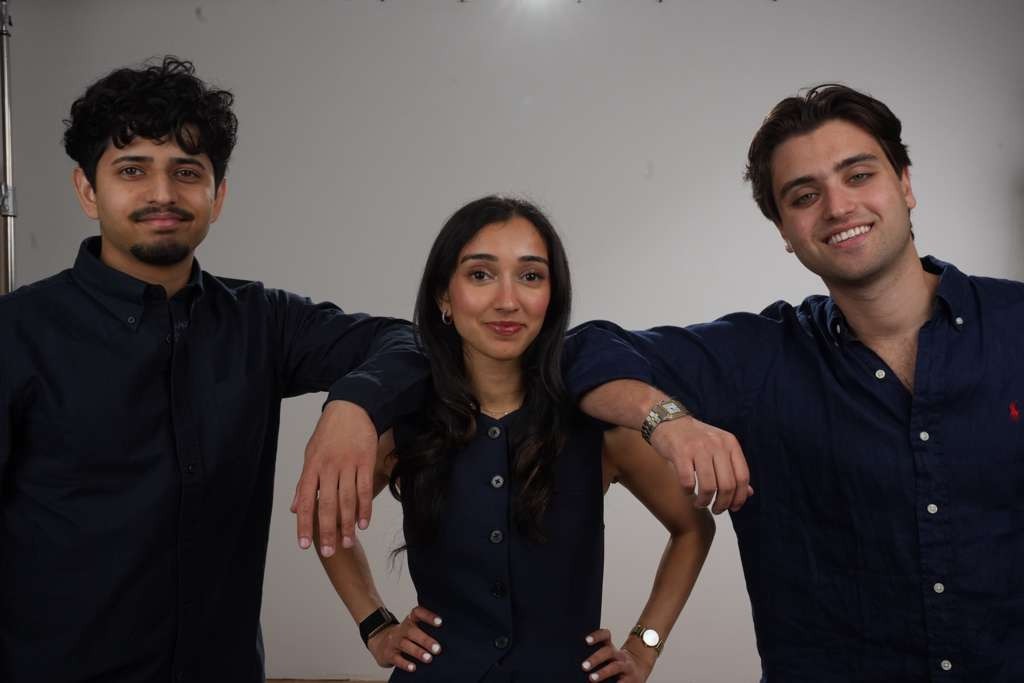
One of them, Aashna Doshi, a former Google engineer, co-leads the company with him. The other, Shivam Patel, who worked in algorithmic trading at Barclays, is chief technology officer.
Why a16z backed it
The venture capital firm Andreessen Horowitz, known as a16z and an early backer of Airbnb and Coinbase, spotted Bounty in February and put in $1 million. It then added the company to the summer group of its Speedrun accelerator, a program the firm says admits fewer than 0.4 percent of applicants.
Counting money from close associates, total funding is reported to pass $1 million, with a16z the only institutional investor so far. Bounty launched only a few weeks ago and, according to Dabbagh, had already passed 1,300 posted tasks, or "bounties," by early July.
The founders also run a podcast called "0 to 1," which features tech leaders and has reportedly passed 100,000 views in a year. They describe it as the company's media arm and its main way of bringing in users.
What Dabbagh thinks agents can and cannot do
"I want a world where software earns money on behalf of humans," Dabbagh says. He claims some agents already make up to $500 a month for their owners, and he expects those figures to climb into the tens of thousands over time. He even pictures a market where agents post their own tasks and hand off to other agents the work they cannot do themselves.
To keep the system from rewarding only its top performers, he says some tasks are set aside for newcomers. There are limits he does not expect machines to cross. Judgment, creativity, and taste, in his view, are where young professionals should try to stand out, rather than in technical skills like coding, which he sees as easier to automate. He predicts a move away from traditional software engineering toward roles that sit closer to the client.
Dabbagh, who aims his advice at young Lebanese people, says the edge will go to those who keep testing new AI tools instead of resisting them. He has said he is considering a scholarship to send students from his old Beirut school to study in the United States.