Nearly seven years after Lebanon's banks stopped functioning as a normal financial system, the country has quietly built a replacement. It runs on mobile wallets, peer-to-peer remittance apps, and increasingly, crypto. The old lira-and-dollar pipeline that ran through Beirut's commercial banks has not returned. What filled the gap is a patchwork of private sector tools that now move billions of dollars a year with almost no involvement from the traditional banking layer.
At the center of this new system are three actors: Whish Money, a Lebanese digital wallet that has become the default tool for domestic payments; Purpl's, a fintech startup aggregating international remittance rails into a single interface; and a growing crypto remittance corridor built on stablecoins and exchanges like Binance.
A Remittance Economy Without a Banking System
Lebanon is reported to receive between $6 billion and $7 billion in remittances every year, equivalent to roughly 30 percent of GDP. That makes it one of the most remittance-dependent economies in the world. For most of the country's modern history, those inflows were routed through banks and formal money transfer operators. Since the 2019 collapse, that channel has largely broken. Capital controls, haircuts on dollar deposits, and a near-total loss of public trust pushed households to find other ways to receive money from abroad.
The replacement did not come from a regulator or a central planner. It came from whoever could move cash fastest, cheapest, and with the fewest questions asked.
Whish: The Default Wallet
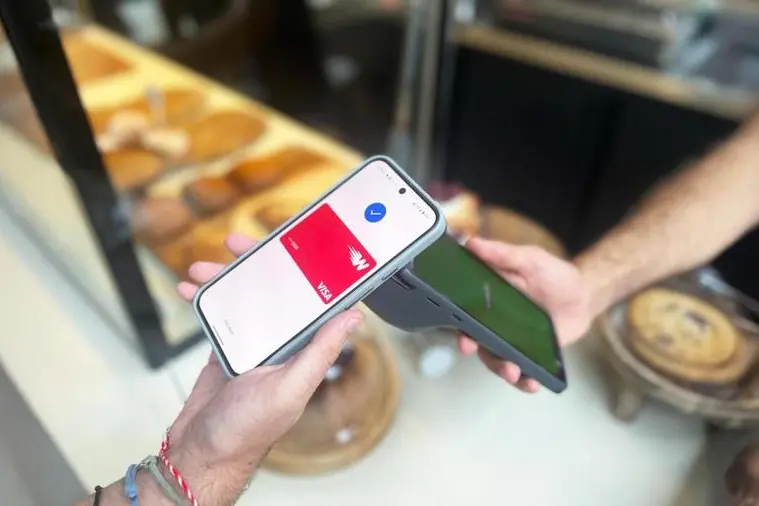
Whish Money has become the closest thing Lebanon has to a national payment utility. Shops accept it. Freelancers invoice with it. Restaurants list it next to cash as a payment option. Its strength is simple: it works when banks do not. Users can hold balances, transfer to other users instantly, and in many cases receive funds from abroad without ever touching a Lebanese bank account.
In an economy where most salaries are paid in cash dollars and most transactions remain informal, Whish solved a specific pain point: how to move money between people without cash or cards. That utility has turned it into critical infrastructure.
Purpl: Consolidating the Remittance Stack
Purpl's bet is different. Rather than becoming a wallet, it aggregates the fragmented landscape of money transfer services that serve Lebanese households. Users abroad can compare providers, fees, and delivery methods in one place, then send money home through whichever rail is cheapest or most reliable on a given day.
This matters because the Lebanese remittance market has splintered. Senders outside the country now juggle OMT, cash pickups, crypto transfers, and app-based wallets depending on what the recipient can actually access. Purpl's role is to make that choice less painful.
Crypto and Stablecoins: The Underlying Rail
Running underneath both the wallet and aggregator layers is a parallel crypto economy. Lebanese users are reported to be among the most active stablecoin adopters in the region, using tokens like USDT as a way to move dollars in and out of the country without relying on banks. Peer-to-peer markets on offshore exchanges have turned Beirut into a live case study of crypto as a remittance rail, not a speculation vehicle.
That activity is largely unregulated. The tokens are digital bearer instruments. The exchanges sit offshore. And the users range from students receiving tuition payments to business owners settling invoices.
The Regulator Catches Up
Finance Minister Amer Bisat, a former BlackRock managing director, is reported to have opened regulatory talks with Binance to formalize part of this crypto activity. The direction of those talks has not been publicly detailed, but the signal is clear: policymakers are recognizing that the parallel system is not going away and that ignoring it is no longer a workable option.
What comes out of those discussions will determine whether crypto in Lebanon remains an informal workaround or becomes a licensed layer of the financial system.
Lebanon is one of the few countries in the world where a digital parallel financial system has effectively replaced the banking system in daily life. The story is no longer about whether fintech can disrupt incumbents. The incumbents have already been disrupted by the crisis itself. What remains is the question of whether the state will formalize this new infrastructure or continue to let it grow in the gray zone.
For founders, investors, and policymakers across the wider MENA region, Lebanon has become an unintentional experiment in what a post-bank economy looks like. The next phase depends on whether regulation catches up with reality, or whether reality simply continues to outrun it.
 Whish Money
 Purpl
Purpl