Markets turned risk-off on Feb. 23 as tariff uncertainty returned to the forefront. U.S. stock futures fell (S&P 500 -0.8%, Nasdaq -1.0%), bitcoin slid to around $64,698 in Reuters trading (and traded near $65,146 in market data), gold rose about 1.1%, and oil eased.
Global markets opened the week under pressure after renewed uncertainty around U.S. tariffs sparked a risk-off move across equities, crypto and currencies.
Stocks: futures retreat as policy signals shift
Wall Street futures slipped in Asia, with S&P 500 futures down 0.8% and Nasdaq futures down 1.0%, according to Reuters, as investors assessed the latest developments in U.S. trade policy.
The fresh volatility follows a fast-changing tariff backdrop after the U.S. Supreme Court struck down a broad set of tariffs imposed under emergency powers, and President Donald Trump then pointed to a new temporary tariff framework. Reuters reported Trump said he would raise a temporary tariff rate to 15% from 10%, referencing Section 122 of the Trade Act.
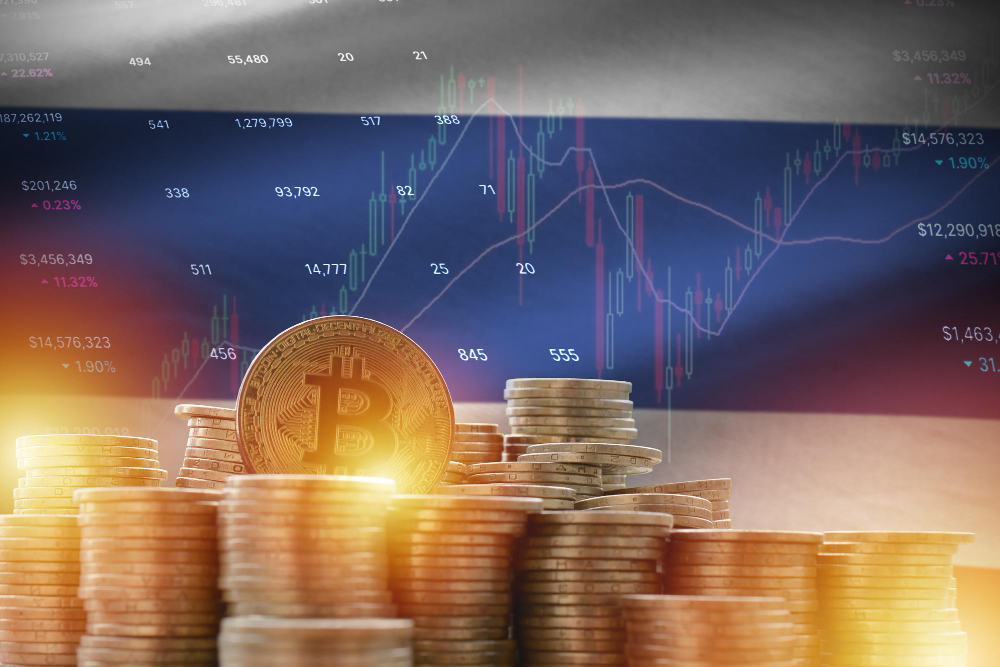
Crypto: bitcoin slides below $65,000
Risk assets sold off in crypto as well. Reuters reported bitcoin down 4.3% to $64,698. Separate market pricing showed bitcoin around $65,146, down roughly 4.2% on the day, with an intraday low near $64,388.
FX and safe havens: dollar weakens, gold rises
The U.S. dollar weakened against major peers: Reuters noted the dollar was down 0.4% vs the yen (to 154.40) and down 0.5% vs the Swiss franc (to 0.7724), while the euro rose to $1.1821.
In commodities, gold gained a safe-haven bid, up about 1.1% (around $5,159/oz in Reuters market wrap). A separate Reuters metals report also described gold reaching its highest level since Jan. 30, supported by tariff-driven uncertainty and a softer dollar.
Oil: prices ease as markets watch geopolitics
Oil was lower in early trading, with Reuters showing Brent down 1.3% to $70.84 and U.S. crude down 1.3% to $65.61, as investors weighed geopolitics alongside the tariff headlines.
Why it matters for MENA: Trade-policy shocks in the U.S. ripple quickly into global risk appetite, affecting the cost of capital, dollar liquidity, commodity pricing and investor positioning — all relevant for MENA markets, sovereign portfolios and export-linked sectors.