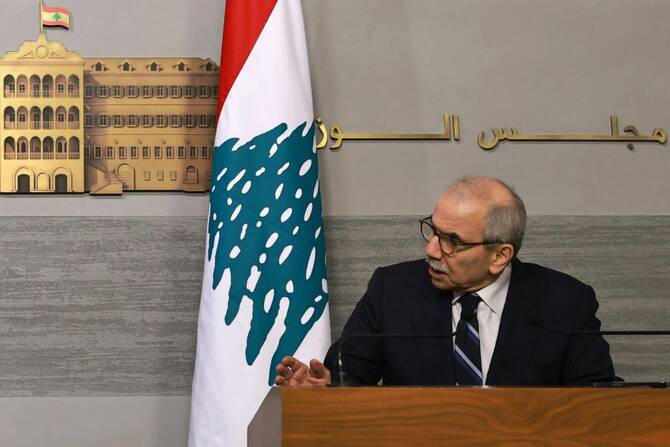
Lebanon's cabinet is racing the banking restructuring bill to parliament, with Prime Minister Nawaf Salam pushing for a vote before the next International Monetary Fund mission arrives in Beirut. The bill has sat in various forms for more than five years, blocked by disputes over how to allocate banking sector losses among the state, the central bank, lenders, and depositors.
According to Arab News, citing local reports, Salam continues to drive the cabinet draft of the long-delayed legislation toward the legislature. The IMF has reportedly tied any further engagement with Lebanon to passage of the Financial Gap Law and adoption of a credible medium-term fiscal framework.
What the IMF wants on the table
The IMF first reached a staff-level agreement with Lebanon in April 2022, conditional on a series of prior actions. Those prior actions included a banking restructuring law, a unified exchange rate, capital controls legislation, and reforms to bank secrecy. Most of them remained unfulfilled for years, leaving the staff-level deal frozen.
IMF officials have reportedly signaled that without the Financial Gap Law passed and credible fiscal numbers behind it, an Article IV mission can review the economy but cannot move toward a financing program. The Financial Gap Law is the legal instrument that defines who absorbs the estimated tens of billions of dollars in losses sitting on the balance sheets of Banque du Liban and the commercial banks.
Where the cabinet draft stands
The current draft circulating in cabinet would set out a framework for resolving insolvent banks, recapitalizing viable ones, and protecting small depositors up to a defined ceiling. Larger deposits would reportedly face a mix of write-downs, conversion to long-dated instruments, and partial recovery tied to future state revenue, according to versions of the text reported in Lebanese press over recent months.
Bankers, depositor associations, and former central bank officials have publicly disagreed on key points, particularly on how much of the loss the state should absorb versus the banks themselves. Salam's team is reportedly trying to lock in a version of the bill that the cabinet can send to parliament without reopening every clause for renegotiation.
The political timeline
Parliament returns to legislative work as Salam's government tries to package the banking law alongside the Financial Gap Law and revisions to the budget. The IMF mission is expected within weeks, and Lebanese officials have reportedly told the Fund they will have draft texts ready for discussion.
Lebanese banks have been operating under informal capital controls since October 2019, and depositors still cannot freely access pre-crisis dollar savings. Passed and implemented, a restructuring law is the precondition for any return of formal banking activity, restored correspondent relationships, and access to international financing.